

- Closed
- Connected
- \({}=V-E+F=2\)
A Necklace of Trefoils
Edge-ideal triangulations of the three-sphere realising \(k\)-fold connected sums of knots.
Presenter:Lezhi Lin
Supervisors:Dr. Alexander He and A/Prof Jonathan Spreer

Measuring knots

How knotted is this loop?
Background of knots


Definition.
A \(K\) is a smoothly embedded circle , up to ambient isotopy.
\(\mathbb{S}^3=\partial B^4\)


Measuring complexity in \(\mathbb{S}^3\)
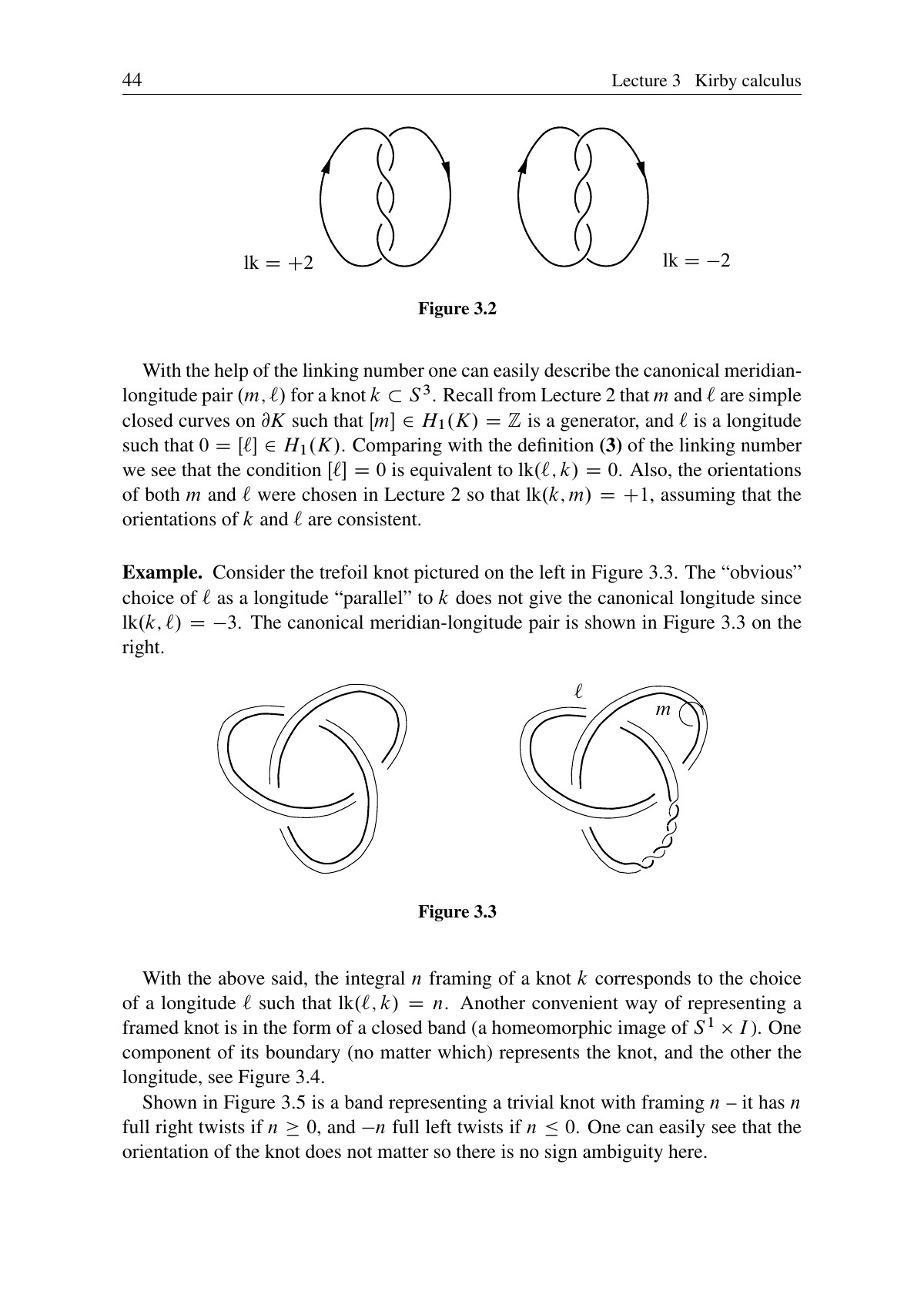
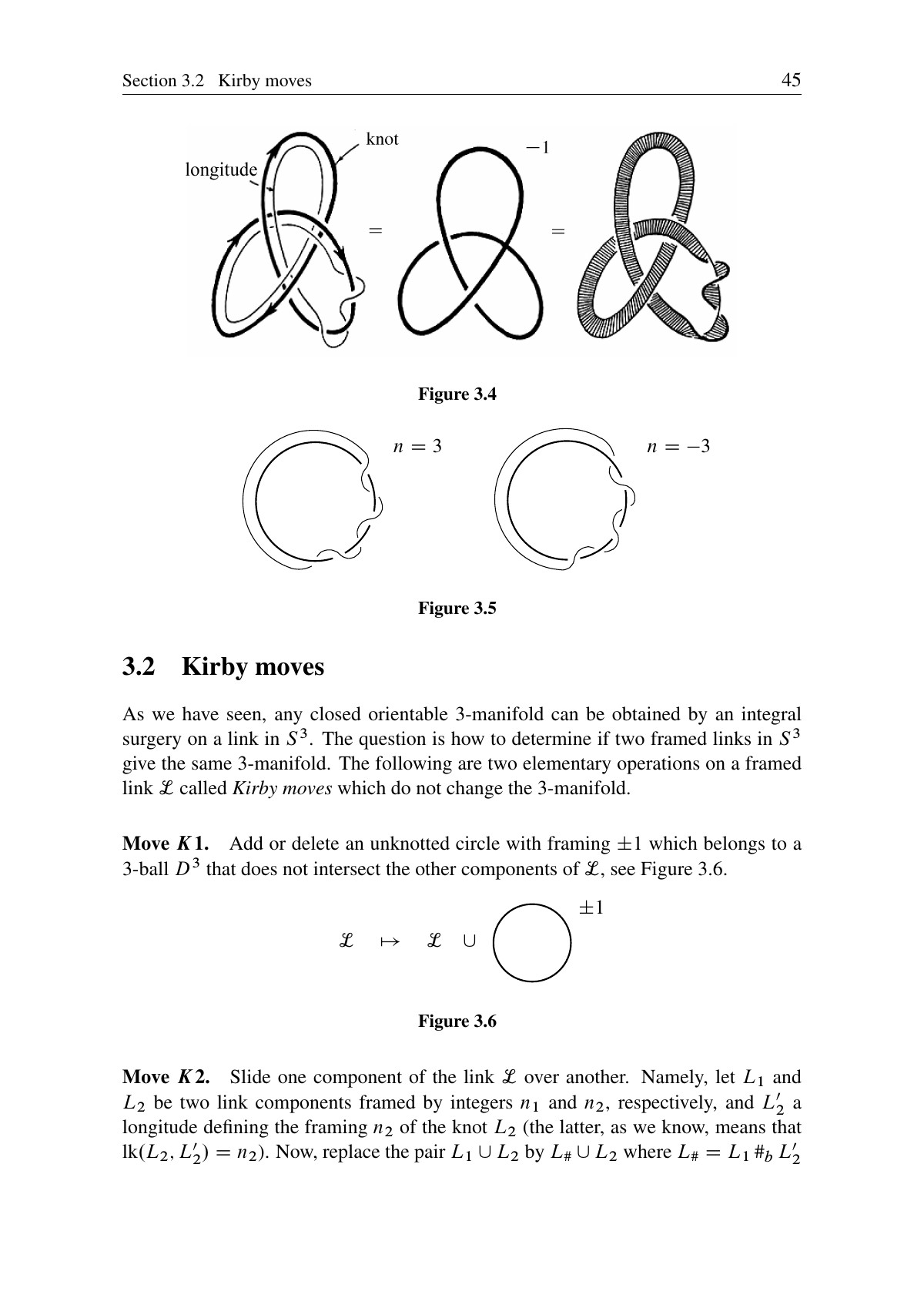
Definition.
The \(c(K)\) of a knot \(K\) is the minimum number of crossings among all its planar diagrams.
Conjecture.
Crossing number is : \(c(K\#J)=c(K)+c(J)\).
Edge-ideal triangulation of \(\mathbb{S}^3\)
-
triangulation theorem
-
-
-
-
-
-
Realises every twist knot with \(c\) crossings as one edge of \(\lfloor c/2\rfloor+2\) tetrahedra, conjectured minimal for \(c\ge 5\).
-
Realises every knot as one edge of a one-vertex \(\mathbb{S}^3\).
This paper (of very high quality) is recently accepted in JCTA (a very good journal), to appear in February 2027!!
-
Factorises a knot given as an edge loop in a triangulation of \(\mathbb{S}^3\) into its prime summands.
-
Before this project: \(k\) trefoils cost at least \(2k\) and at most \(33k-1\) tetrahedra. -
Builds a canonical one-vertex \(\mathbb{S}^3\) for every torus knot.
Aims towards A Necklace of Trefoils
Edge-ideal triangulations of the three-sphere realising \(k\)-fold connected sums of trefoils.
Method I. Construction
Aim I.
Method II. Proof
Aim I.Aim II.
Definition.
A surface in \(\mathbb{S}^3\) is if it meets each tetrahedron of \(\mathcal{T}\) in disjoint discs, each a triangle cutting off one vertex or a quadrilateral separating two opposite edges.
Results
Aim I.Aim II.Aim III.
Upper bound.
\[\begin{aligned}\tau(\#^{k}K_{3_1})&\le 1+4(k-1)\\&=4k-3.\end{aligned}\]
Discussions
-
Conjecture. \(\tau(\#^{k}K_{3_1})=4k-3\).
-
Bounds for every knot.
-
How small can simplicial spheres with be?
-
…
Development
Source code languages
Welcome to - Hidden Features
Keys
- 1…9
- Jump to a slide; a lone digit waits a moment.
- ←↑PgUpBackspace
- Previous build, then the previous slide at its last build.
- →↓PgDnSpaceEnter
- Next build, then the next slide.
- B
- Method II, crushing layer: toggle the blade, then drag to cut.
- EscO
- Overview: arrows browse, Enter opens. Down beneath Development finds this slide.
- F
- Fullscreen.
- HomeEnd
- First and last slide.
- L
- Replay the current layer; reset its demo views.
- P
- Presenter window: notes, clock, next slide.
- R
- Back to the title; forgets the citation you left.
- ShiftF10
- Next build, like a right-click.
- Z
- Return to the citation you left.
In the demonstrations
- +−0
- Zoom the selected element; Enter selects the next.
- A heading
- Open any aim or step on its own; Next continues from it.
- A keyword
- Jump to its bibliography entry, with a highlight or confetti; Z brings you back.
- Click a page
- Turn pages in the closing book (Background II).
- Click, then scroll
- Zoom a window on Aims or Methods.
- Double-click
- Stamp a knot flat or lift it; reset a demo view.
- Drag
- Turn a knot or solid; on Background I, drag a knot into another to sum them.
- Scroll or pinch
- Zoom a demo, Tait's table or the closing book; drag pans the table.
- Select two faces
- Pair the bead's faces yourself (Methods I, Step 2); a mismatch starts over.
- Shiftdrag
- Rotate only the knot (Background I); tilt a bead or the octahedron freely.
- Wheel in a pane
- Scroll the timeline, aims or steps; Up and Down scroll a focused pane first.
Thank you!
Presenter:Lezhi Lin
Supervisors:Dr. Alexander He and A/Prof Jonathan Spreer
Acknowledgment
- We acknowledge the Gadigal of the Eora Nation, the Traditional Custodians of the land on which stands, and pay our respects to Elders past and present.
- This presentation is submitted in partial fulfilment of the assessment requirements for SCDL3992 Science Dalyell Individual Research Project at . I'm extremely grateful to my supervisor, Dr. Alexander He, for his patience and great insights. In acknowledgment of Alex, the normal surfaces and the crushing blade are coloured with the primary colour of . I'd also like to thank A/Prof Jonathan Spreer for hosting this project and for pointing me to the back in August 2025.
- Generative AIs, including Codex 6 Astra and 6.1 Sol, Claude Opus 5.5, and Fable 5.1, were used to assist with this project. These models were especially helpful with implementing rapid navigation, maintaining citations and labels, debugging and testing. Legacy models were also used earlier in development. All outputs have been reviewed, edited, and validated.
Gluing maps for the edge-ideal triangulation construction
0123
0123
0123
0123
0123
01 Assemble the octahedron
| Face | Face | Map |
|---|---|---|
| \(\mathcal{T}_{3_1}.1\) | \(\mathcal{T}_2.0\) | 2031 |
| \(\mathcal{T}_{3_1}.2\) | \(\mathcal{T}_3.0\) | 3201 |
| \(\mathcal{T}_1.3\) | \(\mathcal{T}_2.3\) | 2103 |
| \(\mathcal{T}_1.2\) | \(\mathcal{T}_3.2\) | 3120 |
02 Pair the boundary faces
| Face | Face | Map |
|---|---|---|
| \(\mathcal{T}_{3_1}.0\) | \(\mathcal{T}_{3_1}.3\) | 3201 |
| \(\mathcal{T}_2.1\) | \(\mathcal{T}_3.1\) | 0132 |
| \(\mathcal{T}_2.2\) | \(\mathcal{T}_3.3\) | 0132 |
03 Attach to \(\mathcal{T}_0\)
| Face | Face | Map |
|---|---|---|
| \(\mathcal{T}_0.0\) | \(\mathcal{T}_1.0\) | 0321 |
| \(\mathcal{T}_0.3\) | \(\mathcal{T}_1.1\) | 2031 |
Hover over a row to preview the paired faces.
References
- [AK14]Jørgen Ellegaard Andersen and Rinat Kashaev, A TQFT from Quantum Teichmüller Theory, Communications in Mathematical Physics 330 (2014), 887–934.
- [BAGPN23]Fathi Ben Aribi, François Guéritaud, and Eiichi Piguet-Nakazawa, Geometric triangulations and the Teichmüller TQFT volume conjecture for twist knots, Quantum Topology 14 (2023), no. 2, 285–406.
-
[BBP+26]Benjamin A. Burton, Ryan Budney, William Pettersson, et al., Regina: Software for low-dimensional topology, https://regina-normal
.github , 1999–2026, Offline verification of the tetrahedron demonstration’s face pairings, quotient vertex and edge classes, three-sphere recognition, and trefoil edge-complement example..io/ - [Bin59]R. H. Bing, An alternative proof that 3-manifolds can be triangulated, Annals of Mathematics 69 (1959), no. 1, 37–65.
- [BKR26]R. İnanç Baykur, Robion C. Kirby, and Daniel Ruberman (eds.), K3: A new problem list in low-dimensional topology, Mathematical Surveys and Monographs, vol. 295, American Mathematical Society, Providence, RI, 2026.
- [BL13]Bruno Benedetti and Frank H. Lutz, Knots in Collapsible and Non-Collapsible Balls, The Electronic Journal of Combinatorics 20 (2013), no. 3, P31.
- [Bra21]H. R. Brahana, Systems of Circuits on Two-Dimensional Manifolds, Annals of Mathematics 23 (1921), no. 2, 144–168.
References (continued)
- [Bur13]Benjamin A. Burton, Computational topology with Regina: algorithms, heuristics and implementations, Geometry and Topology Down Under, Contemporary Mathematics, vol. 597, American Mathematical Society, Providence, RI, 2013, pp. 195–224.
- [Bur14], A New Approach to Crushing 3-Manifold Triangulations, Discrete & Computational Geometry 52 (2014), no. 1, 116–139.
- [FP30]F. Frankl and L. Pontrjagin, Ein knotensatz mit anwendung auf die dimensionstheorie, Mathematische Annalen 102 (1930), 785–789.
- [GJ83]M. R. Garey and D. S. Johnson, Crossing Number is NP-Complete, SIAM Journal on Algebraic Discrete Methods 4 (1983), no. 3, 312–316.
- [Hak61]Wolfgang Haken, Theorie der Normalflächen: Ein Isotopiekriterium für den Kreisknoten, Acta Mathematica 105 (1961), no. 3, 245–375.
-
[Hat23]Allen Hatcher, Notes on basic 3-manifold topology, Available at https://pi
.math , 2023..cornell .edu/ ~hatcher/ 3M/ 3Mdownloads .html -
[He25]Alexander He, AlexHe98/idealedge, 2025, Software artifact (2025 snapshot), swhId:
swh:1:dir:ebcbe72831246d6d99ed7ff98f3cc00940ed808c. -
[HSS25]Alexander He, Eric Sedgwick, and Jonathan Spreer, A Practical Algorithm for Knot Factorisation, 41st International Symposium on Computational Geometry (SoCG 2025) (Dagstuhl, Germany) (Oswin Aichholzer and Haitao Wang, eds.), Leibniz International Proceedings in Informatics (LIPIcs), vol. 332, Schloss Dagstuhl – Leibniz-Zentrum für Informatik, 2025, Full version,
arXiv:2504, pp. 55:1–55:15..03942
References (continued)
- [IMPS27]Dionne Ibarra, Daniel V. Mathews, Jessica S. Purcell, and Jonathan Spreer, Triangulations of the \(3\)-sphere with knotted edge, Journal of Combinatorial Theory, Series A 226 (2027), 106269, Published online 2026.
- [JR03]William Jaco and J. Hyam Rubinstein, 0-efficient triangulations of 3-manifolds, Journal of Differential Geometry 65 (2003), no. 1, 61–168.
-
[JR06], Layered-triangulations of 3-manifolds, 2006, Preprint,
arXiv:math/.0603601 -
[LS26]Lezhi Lin and Jonathan Spreer, Torus knots as loop-edges in three-sphere triangulations, 2026, Preprint,
arXiv:2609..14200 - [Mat07]Sergei Matveev, Algorithmic Topology and Classification of \(3\)-Manifolds, 2 ed., Algorithms and Computation in Mathematics, vol. 9, Springer, Berlin, 2007.
- [Moi52]Edwin E. Moise, Affine structures in \(3\)-manifolds. V. The triangulation theorem and Hauptvermutung, Annals of Mathematics 56 (1952), 96–114.
- [OSS15]Peter S. Ozsváth, András I. Stipsicz, and Zoltán Szabó, Grid Homology for Knots and Links, Mathematical Surveys and Monographs, vol. 208, American Mathematical Society, Providence, RI, 2015.
- [Rol03]Dale Rolfsen, Knots and links, vol. 346, AMS Chelsea Publishing, Providence, RI, 2003.
- [Sav12]Nikolai Saveliev, Lectures on the topology of 3-manifolds: An introduction to the casson invariant, 2 ed., De Gruyter Textbook, De Gruyter, Berlin/Boston, 2012.
References (continued)
- [Sch11]Saul Schleimer, Sphere recognition lies in NP, Low-Dimensional and Symplectic Topology, Proceedings of Symposia in Pure Mathematics, vol. 82, American Mathematical Society, Providence, RI, 2011, pp. 183–213.
- [Sch49]Horst Schubert, Die eindeutige zerlegbarkeit eines knotens in primknoten, Sitzungsberichte der Heidelberger Akademie der Wissenschaften, vol. 3, Springer Berlin Heidelberg, January 1949, pp. 55–105.
- [Sei35]H. Seifert, Über das Geschlecht von Knoten, Mathematische Annalen 110 (1935), 571–592.
- [Tai84]P. G. Tait, On knots. Part II, Transactions of the Royal Society of Edinburgh 32 (1884), no. 2, 327–342, Plate XLIV.
- [Whi49]J. H. C. Whitehead, Combinatorial homotopy. I, Bulletin of the American Mathematical Society 55 (1949), 213–245. MR 30759
Technology & Design
Browser & 3D Graphics
-
[Ecm26]Ecma International, ECMAScript 2026 Language Specification, https://ecma-international
.org/ , 2026, ECMA-262, 17th edition; JavaScript language.publications-and-standards/ standards/ ecma-262/ -
[Khr26]WebGL API Registry, https://registry
.khronos , 2011–2026, Browser graphics API underlying the local Three.js renderers for interactive yarn, knots, LEGO bricks, triangulated beads, normal surfaces, and the turning book; supports mesh drawing, shaders, depth ordering, and transparency..org/ webgl/ -
[Thr26]Three.js authors, Three.js: JavaScript 3D library, https://threejs
.org/ , 2010–2026, Versions 0.128.0 (yarn demo) and 0.185.1 (shared scene engine); renders spatial knots and connected sums, LEGO brick examples, bead and necklace assembly, normal-surface tetrahedra, and the turning book, including meshes, cameras, materials, lighting, transparency, and projected shadows. -
[WHA26]WHATWG, HTML Living Standard, https://html
.spec , 2026, HTML, custom elements, Canvas, dialogs, and browser interaction..whatwg .org/ multipage/ -
[Wor26]World Wide Web Consortium, Web Standards: CSS, SVG, and MathML, https://www
.w3 , 2026, Slide layout, animation, vector artwork, and semantic mathematics..org/ standards/
Design & Inspiration
-
[App26]Apple Inc., SwiftUI, Software framework, https://developer
.apple , 2019–2026..com/ swiftui/ -
[Hal26]Halfbrick Studios, Fruit Ninja, Video game for iOS, https://apps
.apple , 2010–2026, The swipe and its blade trail: inspiration for the crushing blade in Method II..com/ app/ fruit-ninja/ id362949845 -
[Mon]Monash University, Brand book: Colours, https://www
.monash , Palette source for the bibliography citation-landing confetti: Monash blue, Heritage blue, Electric blue and Blueberry..edu/ brandbook/ brand-elements/ colours - [PABL18]Samuel Poincloux, Mokhtar Adda-Bedia, and Frédéric Lechenault, Geometry and elasticity of a knitted fabric, Physical Review X 8 (2018), 021075.
-
[PT26]Hermès Paris and Les French Twins, We made appear the HERMES horse, YouTube video: https://www
.youtube , 7 July 2026..com/ watch? v= npFlC88jNbA& t= 1s - [Row97]J. K. Rowling, Harry Potter and the Philosopher’s Stone, Bloomsbury, 1997, Platform Nine and Three-Quarters: inspiration for the hidden fractional slide.
- [SYD23]University of Sydney visual identity guidelines, February 2023.
-
[UQ26]The University of Queensland Design System, https://design-system
.uq , 2026..edu .au/
Development & Build Tools
-
[Git26a]Git contributors, Git: Distributed Version Control, https://git-scm
.com/ , 2005–2026, Version control for authored slide sources, reusable scene engines, build scripts, and assets; the revision history supports reviewing changes and restoring earlier implementations. -
[Git26b]GitHub, Inc., GitHub, https://github
.com/ , 2008–2026, Hosting the source repository and its revision history, and providing the Git source for the Cloudflare Pages deployment workflow.about -
[Nod26]Node.js contributors, Node.js: JavaScript Runtime, https://nodejs
.org/ , 2009–2026, Runtime for HTML formatting, bibliography and equation preparation, renderer bundling, source-language measurement, asset fingerprinting, offline packaging, and automated tests.en/ about -
[NPM26]npm: JavaScript Package Management, https://docs
.npmjs , 2010–2026, Installs the runtime and build dependencies and invokes the project’s source preparation, local preview, test, packaging, and deployment commands..com/ about-npm/ -
[Pyt26]Python Software Foundation, Python, https://www
.python , 1991–2026, Runs the static no-cache preview server, including changed-source bibliography and equation refresh and source-language remeasurement; also prepares the closing-book page images and texture atlas through local image tools..org/ -
[Wal26]Evan Wallace, esbuild: An Extremely Fast Bundler for the Web, https://esbuild
.github , 2020–2026, Version 0.28.1; bundles the maintained knot renderer, Three.js engine, and room-lighting environment into the local browser script reused by the knot, LEGO, tetrahedron, bead, and related three-dimensional scenes..io/
Hosting & Presenter Services
-
[Clo26a]Cloudflare, Inc., Cloudflare Developer Platform, https://developers
.cloudflare , 2017–2026, Pages hosts the public deck and deployment previews; Workers-based Pages Functions provide the private presenter API, Access protects presenter login, and Workers KV stores per-presenter notes and uploaded avatar settings in separate production and preview namespaces..com/ -
[Clo26b], Wrangler: Cloudflare Developer CLI, https://developers
.cloudflare , 2019–2026, Version 4.126.0; runs local Pages, Functions, and KV previews with the configured loopback access bypass, bundles the private presenter functions, and deploys the curated public asset distribution to Cloudflare Pages..com/ workers/ wrangler/ -
[Sko26]Filip Skokan, jose: JavaScript Object Signing and Encryption, https://github
.com/ , 2019–2026, Version 6.2.10; retrieves Cloudflare Access JSON Web Keys and verifies presenter JWT signatures, issuer, audience, and validity claims before the protected presenter endpoints use the authenticated identity for notes and avatar storage.panva/ jose
Image Processing
-
[Pil26]Pillow contributors, Pillow: The Python Imaging Library, https://python-pillow
.org/ , 2010–2026, Converts rendered PDF pages into grayscale JPEGs, resizes and pastes page cells into the closing-book texture atlas, and writes the optimized full-page textures loaded during the page-turn animation. -
[Pop26]Poppler developers, Poppler: A PDF Rendering Library, https://poppler
.freedesktop , 2005–2026, The pdfinfo tool reads the source book’s page count and pdftoppm rasterizes its atlas cells and readable page textures; pdftoppm also rasterizes and crops the historical Tait plate used by the knot artwork..org/
Typography & Typesetting
-
[Ame26]American Mathematical Society, AMS-LaTeX Supporting Software, https://ctan
.org/ , 1990–2026, The amsalpha bibliography style supplies alphabetic citation labels, global entry ordering, and repeated-author formatting for the generated reference slides and full citation text.pkg/ amscls -
[Art26]Artifex Software, Inc., Ghostscript, https://www
.ghostscript , 1988–2026, Provides PostScript support for dvisvgm and the exact bounding boxes exported by preview, keeping outlined equations aligned with their measured TeX dimensions..com/ -
[AUC26]Preview: Extracting LaTeX Fragments for Output, https://ctan
.org/ , 2001–2026, Places each typeset inline or display expression on a tight isolated preview page, providing the bounding box used by dvisvgm alongside the separately recorded TeX box width, height, and depth.pkg/ preview -
[Gie26]Martin Gieseking, dvisvgm: A DVI-to-SVG Converter, https://dvisvgm
.de/ , 2005–2026, Converts LaTeX-generated DVI equation pages into self-contained SVG glyph outlines, retaining preview bounding boxes for the cached inline and display mathematics and its exact placement. -
[HMT26]Morten Høgholm, Lars Madsen, and The LaTeX Project, Mathtools: Mathematical Tools for LaTeX, https://ctan
.org/ , 2004–2026, Supplies mathematical commands and layout when the authored slide and bibliography expressions are compiled into the outlined equation cache.pkg/ mathtools -
[Kok26]Ron Kok, Temml: A TeX-to-MathML conversion library in JavaScript, https://github
.com/ , 2022–2026, Parses authored TeX delimiters into annotated semantic MathML for accessible mathematics; the live deck pairs that semantic representation with the separately prepared NewTX SVG glyph outlines, also retained in standalone export.ronkok/ Temml -
[LaT26]LaTeX: A Document Preparation System, https://www
.latex-project , 1983–2026, Compiles authored mathematical expressions with Libertinus text, mathtools, newtxmath, and preview; writes the DVI pages and TeX box dimensions used to prepare precisely positioned SVG equations..org/ -
[LCS26]Raph Levien, Cyreal, and Michael Sharpe, Inconsolatazi4: Inconsolata with TeX Support, https://ctan
.org/ , 2013–2026, Inconsolatazi4 Regular font version 1.015; TeX package version 1.121; the bundled face supplies bibliography URLs and code-like reference text with the alternate letter and quotation features used by the report’s URL typography.pkg/ inconsolata -
[Lib26]Libertinus Fonts, https://github
.com/ , 2012–2026, Version 7.051; bundled Sans faces supply slide text and controls, while Serif faces supply emphasis, tool names, citations, and reference lists; Libertinus text fonts also accompany NewTX mathematics in the TeX equation build.alerque/ libertinus -
[M+26]John MacFarlane et al., Pandoc: A Universal Document Converter, https://pandoc
.org/ , 2006–2026, Converts BibTeX-generated LaTeX citation labels and bibliography bodies through a JSON document representation into HTML, preserving formatted names, links, emphasis, and mathematical expressions for the reference slides and citation text. -
[Pat26]Oren Patashnik, BibTeX, https://ctan
.org/ , 1985–2026, Formats the complete bibliography with amsalpha, establishing alphabetic citation labels, global entry order, names, punctuation, and repeated-author conventions; isolated entry formatting supplies full author names for citations.pkg/ bibtex -
[Sha26]Michael Sharpe, NewTX: Alternative uses of the TX fonts, with improved metrics, https://ctan
.org/ , 2012–2026, Package version 1.756; newtxmath version 1.754; supplies the visible mathematical glyphs in the prebuilt SVG equation cache, using the Libertinus-compatible setting and measured TeX dimensions for consistent slide and standalone rendering.pkg/ newtx -
[TeX26]TeX Live, https://tug
.org/ , 1996–2026, Provides the LaTeX, BibTeX, amsalpha, dvisvgm, font packages, and preview tools used for local equation and bibliography preparation; their generated assets are retained for builds that reuse the prepared content.texlive/ - [Wil19]Lars G. Willighagen, Citation.js: A format-independent, modular bibliography tool for the browser and command line, PeerJ Computer Science 5 (2019), e214, Citation.js core and BibTeX plugin version 0.7.21; parses bibliography keyword metadata to route entries into the literature and technology sections and their subsections, while BibTeX supplies the displayed formatting and citation labels.